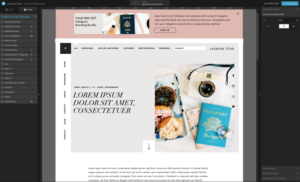


If you are evaluating website platforms for your business, creative studio, or service brand, there is one question that comes up in almost every conversation before a decision gets made: is Showit good for SEO? It is a fair question. Showit builds websites using a visual canvas interface, which sounds, at first glance, like it could be a problem for Google. After all, search engines need to read your content, and anything that stands between your words and Google’s crawlers costs you rankings. So where does Showit actually land?
The answer is more nuanced than the platform debates you will find on Reddit or web design forums. Showit has real strengths that are often undersold, real limitations that are sometimes overstated, and a learning curve that trips up site owners who skip the SEO setup entirely. This post breaks all of it down with specifics, comparisons, and a practical checklist you can act on today.
Yes, Showit is good for SEO when configured correctly. It generates clean HTML for canvas pages, integrates natively with WordPress for blogging (giving you full Yoast/Rank Math support), and ranks comparably to Squarespace and Wix for most searches. The main thing to understand: Showit SEO requires intentional setup. Leave the SEO fields blank and you will not rank. Fill them in and publish consistent content, and Showit competes with any platform.
Showit SEO refers to the process of optimizing a Showit website to appear in Google search results, including configuring meta titles, descriptions, URL slugs, image alt text, schema markup, and publishing content through its native WordPress blog integration.
The Direct Answer: Is Showit Good for SEO?
Yes, Showit is genuinely good for SEO. Not as a marketing talking point, but as a factual assessment based on how the platform works under the hood. Here are five specific reasons why:
1. Showit outputs clean, static HTML. Unlike some website builders that rely heavily on JavaScript to render page content, Showit publishes your canvas as clean HTML that Google’s crawlers can read without executing scripts. Your headings, body text, and links are accessible to search engines directly.
2. It integrates natively with WordPress for blogging. This is the single biggest SEO advantage Showit has over most competing platforms. Your blog runs on actual WordPress, which means you get access to the full WordPress plugin ecosystem, including Rank Math and Yoast SEO. These plugins handle sitemaps, on-page analysis, schema, breadcrumbs, and more at a level that no website builder can match natively.
3. Your site is delivered through Cloudflare’s CDN. Showit hosts your website on Cloudflare’s content delivery network by default, which means fast load times globally without any configuration on your end. Page speed is a confirmed Google ranking factor, and this gives Showit a structural advantage over self-hosted solutions where speed optimization falls entirely on the site owner.
4. You have full control over all critical SEO fields. Showit gives you a dedicated SEO panel for every page where you can set the meta title, meta description, and URL slug. These are the three most fundamental on-page SEO inputs, and Showit makes them accessible without any plugin or workaround.
5. Schema markup and custom header code are fully supported. You can inject schema JSON-LD, Google Analytics, Google Tag Manager, or any other head code directly into Showit pages. This gives you the flexibility to implement advanced SEO structures that many drag-and-drop builders actively block.
For a deeper breakdown of the full setup process, read the detailed Showit SEO guide.
What Showit Does Well for SEO
Clean HTML Output That Google Can Read
The most common concern people raise about Showit is whether Google can actually read a canvas-based design. The answer is yes, with an important clarification. When you publish a Showit page, it generates static HTML files. Text you place on the canvas, headings you assign through the SEO heading settings, and links you create all appear in the page source as readable HTML. Google’s crawler does not need to execute JavaScript to access your content.
This matters because platforms that render content entirely through JavaScript can create crawlability issues. Googlebot can process JavaScript, but it does so in a second wave after the initial crawl, which can delay indexing and create inconsistencies in how your content is understood. Showit sidesteps this problem by serving static HTML as the primary output.
The practical implication: if you write a service page on your Showit site and fill in the SEO fields correctly, Google will find it, read it, and index it the same way it would any standard HTML page.
Native WordPress Blog Integration
This deserves extra attention because it is the feature that sets Showit apart from every other website builder in its category. When you sign up for Showit, your blog does not run on a proprietary content management system with locked-down SEO settings. It runs on WordPress.
What this means in practice is substantial. You can install Rank Math or Yoast SEO and get full on-page SEO analysis for every post. You can set focus keywords, view readability scores, control how your posts appear in Google’s rich results, add FAQ schema, enable breadcrumbs with a single setting, and auto-generate an XML sitemap that you can submit directly to Google Search Console.
None of that requires custom code or workarounds. It is standard WordPress functionality working exactly as it would on any self-hosted WordPress installation. For content-driven SEO strategies, this integration is a serious competitive advantage. Check out the complete guide to Showit SEO for a walkthrough of blog configuration specifically.
Cloudflare CDN for Global Speed
Showit hosts every site on Cloudflare’s global content delivery network. CDNs work by storing copies of your site’s files on servers around the world and serving each visitor from the location closest to them. The result is faster load times for visitors regardless of where they are located, without any technical configuration required from you.
From an SEO standpoint, this matters for two reasons. First, Core Web Vitals, which are a confirmed Google ranking signal, are heavily influenced by how fast your pages load and respond. Cloudflare’s infrastructure gives Showit sites a structural head start on these metrics. Second, fast sites reduce bounce rates, and lower bounce rates send positive engagement signals to Google about the quality of your pages.
For most small business and creative studio websites, the CDN delivery Showit provides out of the box is comparable to or better than what a typical self-hosted WordPress site achieves without dedicated optimization work.
Full Control Over Meta Titles, Descriptions, and URL Slugs
Every Showit page has a dedicated SEO settings panel. From this panel you can write a custom meta title, a custom meta description, and set a clean URL slug for the page. These three elements are the foundation of on-page SEO, and Showit gives you direct access to all of them without needing a plugin for the canvas pages.
The meta title is what appears as the clickable headline in Google search results. The meta description appears below it as the descriptive snippet. The URL slug is the part of the address that follows your domain. Getting all three right is basic SEO hygiene, and Showit makes it straightforward. For a walkthrough of exactly how to fill these in, see this guide to Showit SEO settings.
Image Alt Text on Every Element
In Showit’s canvas editor, you can add alt text to every image element individually. Alt text serves two purposes: it describes images to visually impaired users (accessibility), and it gives Google additional context about what an image depicts (image SEO). Sites that skip alt text miss out on ranking opportunities in Google Image Search and also send incomplete signals to the crawler about page content.
Showit makes alt text easy to add through the image settings panel. There is no barrier or plugin requirement. The field is right there in the editor, and filling it in for every image is one of the simplest SEO wins available on the platform.
Schema Markup Support via Header Code
Schema markup is structured data that tells Google specifically what type of content is on your page. A local business, a FAQ section, a service offering, a review, an event, and hundreds of other content types can be described with schema, and doing so can unlock rich result appearances in search like star ratings, FAQ dropdowns, and knowledge panels.
Showit supports schema through its custom header code injection feature. You can paste JSON-LD schema blocks directly into the page settings for any page on your site. For site-wide schema like organization markup, you can add it in the global site settings. This is not as seamless as a WordPress plugin that handles schema with a few toggle switches, but it gives you complete flexibility to implement any schema type Google supports.
Mobile Responsiveness by Default
Showit builds every site with a separate mobile canvas that you design independently. This means your mobile layout is not an afterthought generated by a responsive CSS framework. You actually design it to look the way you want on small screens. The output is a site that Google’s mobile-first indexing evaluates favorably because the mobile experience is intentional and complete.
Mobile-first indexing means Google primarily uses the mobile version of your site for ranking. A site that delivers a well-designed, fast-loading mobile experience has a direct advantage in search over one where mobile is a scaled-down afterthought.
What Showit Doesn’t Do as Well (Be Honest)
A platform assessment that only covers the positives is not useful. Here are the real limitations of Showit SEO, stated honestly without overstating the problems.
Canvas Text Structure Requires Attention
Showit gives you a lot of freedom in how you place text on the canvas. That freedom means you can accidentally create pages where your visually prominent heading is set to a paragraph style rather than an H2 or H3. Google uses heading tags to understand the hierarchy and topic structure of a page. If your content looks well-organized visually but is tagged inconsistently in the HTML, Google may not understand your page structure the way you intended.
The fix is straightforward: pay attention to the text element type settings in Showit’s editor and assign heading tags deliberately. But it requires awareness that not all Showit users have. Sites built by designers who do not think about SEO structure can end up with visually beautiful pages that are semantically flat to a search engine.
No Built-In Technical SEO Audit Tool
Showit does not include a built-in tool that scans your site for SEO issues, identifies broken links, flags duplicate title tags, or reports on crawl errors. To get that level of technical visibility, you need external tools like Google Search Console (free), Ahrefs, Semrush, or Screaming Frog. This is not unique to Showit, as most website builders lack native audit functionality, but it is worth noting that you cannot stay on top of technical SEO without bringing in outside tools.
Page Speed Depends on Image Optimization
Cloudflare’s CDN handles delivery speed well, but it cannot compress an oversized image before serving it. If you upload uncompressed, full-resolution images to your Showit canvas, your Core Web Vitals scores will suffer regardless of how good the infrastructure is. Showit does not automatically compress or resize images on upload the way some platforms do with more aggressive media pipelines.
This means image optimization is your responsibility. Images should be compressed before upload, sized appropriately for their display dimensions, and converted to WebP where possible. It adds a step to the workflow but is entirely manageable with tools like Squoosh or TinyPNG.
No Server-Side Rendering Control
Showit is a fully managed hosted platform. You do not have access to server configuration, which means you cannot implement server-side rendering adjustments, edge middleware, or advanced caching headers the way a developer working with a custom server setup can. For most websites, this level of control is unnecessary. For technically sophisticated projects with specific performance requirements, it is a constraint worth knowing about.
Limited Built-In Redirect Management
If you change a URL slug on a Showit page, you need to manage the redirect yourself. Showit does not have a built-in redirect manager that automatically handles old URLs the way some WordPress plugins or platforms like Webflow do. Managing redirects incorrectly can result in 404 errors, which are bad for both SEO and user experience. You can handle redirects through your Showit domain settings or by working with Showit support, but it requires manual attention rather than an automated system.
Showit SEO vs WordPress: Honest Comparison
This comparison comes up constantly, and it deserves a direct answer rather than a diplomatic non-answer.
| Factor | Showit | Self-Hosted WordPress | Edge |
|---|---|---|---|
| SEO Plugins | Full Rank Math / Yoast on blog; canvas pages use native SEO fields | Full Rank Math / Yoast on all pages and posts | WordPress slight edge |
| Blog SEO | Native WordPress blog, full plugin support, XML sitemap, schema | Native WordPress blog, full plugin support, XML sitemap, schema | Tied |
| Technical Control | Managed hosting, limited server access, no .htaccess editing | Full server access, custom hosting, .htaccess, caching headers, CDN choice | WordPress clear edge |
| Page Speed | Cloudflare CDN included, image optimization required manually | Speed depends on host quality and optimization plugins | Showit slight edge |
| Ease of Use | Visual canvas editor, no coding needed, intuitive for designers | Steeper learning curve, more maintenance, plugin management required | Showit clear edge |
| Design Flexibility | Pixel-perfect visual design, no template constraints | Design limited to theme/block editor, needs developer for custom layouts | Showit clear edge |
| SEO Verdict | Strong for most business and creative websites | Maximum technical ceiling, best for complex or programmatic SEO | Use case dependent |
The honest summary: if your primary goal is maximum technical SEO control and you are comfortable managing a WordPress installation, self-hosted WordPress gives you a higher ceiling. If your goal is a beautifully designed site that ranks well without requiring developer-level technical maintenance, Showit achieves the same SEO outcomes for the vast majority of business websites with significantly less overhead.
The Showit plus WordPress blog combination means you are not actually giving up WordPress SEO capabilities for your content. You are just trading server-level technical control for design freedom and easier maintenance. For most business owners and creatives, that is an excellent trade.
Showit SEO vs Squarespace
Squarespace is the platform Showit gets compared to most often among design-conscious business owners, and it is a fair comparison because both platforms prioritize aesthetics. The SEO picture, however, favors Showit in most scenarios.
The most significant difference is the blog. Showit’s blog runs on actual WordPress. Squarespace’s blog runs on Squarespace’s proprietary CMS. This means on a Squarespace site, your blog SEO capabilities are limited to what Squarespace decides to build into its platform. There is no Rank Math. There is no Yoast. There is no open plugin ecosystem. You get Squarespace’s native SEO fields, which cover the basics but do not approach the depth of a full WordPress SEO plugin setup.
On meta control, both platforms give you access to custom meta titles and descriptions at the page level. Showit gives you slightly more flexibility in how you structure header code injection, which matters if you are implementing custom schema or third-party tracking setups. Squarespace has improved its schema output in recent updates, but it remains more constrained than what you can achieve with Showit plus a WordPress SEO plugin.
Where Squarespace has an advantage is setup simplicity. If you are a complete beginner who has never touched SEO settings before, Squarespace’s guided setup walks you through more of the process with built-in prompts. Showit requires you to know what to fill in, and blank fields mean missed opportunities. That said, the setup learning curve on Showit is manageable, especially with resources like the Showit SEO checklist to guide you.
For anyone planning to compete in search through consistent content publishing, Showit’s WordPress blog integration makes it the stronger long-term choice compared to Squarespace.
Showit SEO vs Wix
Wix has made genuine improvements to its SEO capabilities over the past few years. It has a dedicated SEO setup wizard, supports basic schema types, allows custom meta fields, and generates XML sitemaps. That said, Showit still has meaningful advantages in areas that matter for real-world rankings.
Crawlability is the primary concern with Wix. Wix builds pages using a JavaScript-heavy architecture, and while Google can process JavaScript, the rendering pipeline introduces delays and potential inconsistencies compared to static HTML delivery. Showit’s static HTML output is cleaner and more predictable for Googlebot. This is not a dealbreaker for Wix in 2026, as Google’s JavaScript rendering has improved significantly, but it remains an architectural difference that can show up as slower indexing, particularly for newer or lower-authority sites.
The blog comparison is the same story as with Squarespace. Wix runs a proprietary blog CMS. You do not get Rank Math or Yoast. You do not get the full WordPress plugin ecosystem for your content SEO. Showit’s native WordPress blog integration is a structural SEO advantage that Wix simply cannot match at this time.
Where Wix competes better is in its built-in SEO audit and suggestion tools, which coach users through common SEO tasks within the platform. For someone who wants more guided assistance and has no intention of publishing regular blog content, Wix is a functional choice. But for anyone serious about organic search as a traffic channel, Showit’s combination of clean HTML output and real WordPress blogging gives it a consistent edge over Wix.
How to Make Showit Good for SEO: The Setup Checklist
Showit SEO Setup Checklist (12 Steps)
- Fill in every page title and meta description. Open each page in Showit, click the SEO settings tab, and write a unique, keyword-relevant title under 60 characters and a description under 160 characters. Never leave these blank.
- Connect your WordPress blog. Ensure your Showit plan includes the WordPress blog integration and that the blog subdomain (blog.yourdomain.com or yourdomain.com/blog) is active and accessible to Google.
- Install Rank Math or Yoast SEO on WordPress. These plugins extend your blog’s SEO capabilities dramatically. Configure your sitemap, set default title patterns, and use the on-page analysis for every post you publish.
- Submit your sitemap to Google Search Console. Your WordPress SEO plugin generates an XML sitemap automatically. Copy the sitemap URL and submit it in Google Search Console under the Sitemaps section. Also submit any Showit-generated sitemap for your canvas pages.
- Add alt text to every image. For every image element on your Showit canvas, open the element settings and add a descriptive alt text. Do not use generic phrases like “image1” or leave the field empty.
- Use clean, keyword-relevant URL slugs. Every page slug should be short, descriptive, and contain your primary keyword where natural. Avoid slugs with random numbers, default date structures, or query strings.
- Add schema markup via header code injection. For your home page, add Organization schema. For service pages, add Service schema. For your blog, your SEO plugin handles schema automatically. Paste JSON-LD blocks into the page-level header code field in Showit’s settings.
- Compress every image to under 300KB before upload. Use Squoosh, TinyPNG, or ImageOptim to reduce file size without visible quality loss. This directly improves your Core Web Vitals scores and page load time.
- Set up Google Business Profile if you serve local clients. Local SEO is driven largely by your Google Business Profile. A complete, verified profile with regular updates and reviews complements your on-site SEO for location-based searches.
- Publish regular, keyword-targeted blog content. Consistent publishing on your WordPress blog builds topical authority and gives Google more indexed pages to surface in search. Aim for at least one post per month, ideally two to four.
- Build internal links between your pages and posts. Link relevant blog posts to each other and to your service pages. Internal links distribute ranking authority across your site and help Google understand your content structure.
- Earn backlinks from relevant websites. Off-site authority is a major ranking factor. Guest posts, directory listings, podcast appearances, and press mentions on relevant websites all contribute to your domain’s authority in Google’s eyes.
Does Showit’s Canvas Design Hurt SEO?
This is the biggest myth in the Showit SEO conversation, and it is worth addressing directly because it stops some people from choosing a platform that would genuinely serve them well.
The concern goes something like this: Showit uses a visual canvas, so maybe Google cannot read it. Maybe the design-first approach means the text is rendered as images or locked inside a Flash-like interface that search engines cannot penetrate. This concern is understandable but factually incorrect.
Here is what actually happens when you publish a Showit page. Showit takes your canvas design and generates static HTML files from it. Those files are what get served to visitors and to Google’s crawler. The text you place on the canvas becomes text in the HTML. The headings you assign through the element type settings become actual H2 and H3 tags in the markup. The links you create become anchor tags. There is no invisible barrier between your content and Google.
What actually causes indexing problems on Showit sites is not the canvas itself. It is missing SEO fields, blank meta titles, pages without internal links pointing to them, images with no alt text, and URL slugs that were never customized from the default. These are content and configuration problems, not platform architecture problems. They also happen on WordPress sites, Squarespace sites, and custom-coded sites built by developers who do not prioritize SEO setup.
The canvas is not the enemy. Incomplete setup is the enemy. A well-configured Showit site with properly tagged headings, filled SEO fields, and clean URL slugs will be crawled and indexed by Google the same way any static HTML website would be. The architecture supports it. You just have to use it correctly.
Showit Page Speed and Core Web Vitals
Page speed is a confirmed Google ranking factor, and Core Web Vitals, which are the specific speed metrics Google measures, affect your position in search results. Understanding how Showit performs on these metrics helps you set realistic expectations and take the right optimization steps.
The Role of Cloudflare CDN
Every Showit site is delivered through Cloudflare’s content delivery network. This means your site’s files are cached on servers distributed globally, and each visitor is served from a location near them rather than from a single origin server. For a business that serves clients in multiple cities or countries, this infrastructure provides a meaningful performance baseline without any technical setup required.
Cloudflare also provides SSL certificates, DDoS protection, and basic performance optimizations automatically. These are things that self-hosted website operators often spend hours configuring and paying for separately. Showit includes them at the hosting level.
Where Image Optimization Makes or Breaks Your Score
The most common reason Showit sites score poorly on Google PageSpeed Insights is oversized images. Showit does not automatically compress images on upload. If you upload a 4MB JPEG from your camera directly to the canvas, it will be served to visitors at close to that file size. On a page with several large images, this can tank your Largest Contentful Paint (LCP) score, which is one of the three Core Web Vitals metrics Google evaluates.
The solution is simple: compress before you upload. Tools like Squoosh (free, browser-based) or TinyPNG can reduce image file sizes by 60 to 80 percent without visible quality loss. Aim for images under 300KB for most elements, and under 150KB for images that load above the fold. Hero images that span the full width of the screen can be kept under 500KB if compression is applied effectively.
How to Check Your Showit Site Speed
Use Google PageSpeed Insights (pagespeed.web.dev) to test any page on your Showit site. Enter the full URL and run the analysis. The report will give you separate scores for mobile and desktop, identify specific Core Web Vitals measurements, and list the individual issues that are reducing your score, ordered by impact.
For most well-optimized Showit sites, you can reasonably aim for mobile scores in the 70 to 85 range and desktop scores in the 85 to 95 range. Scores in this range are competitive for service and creative business websites. If your mobile score is below 50, oversized images are almost certainly the primary cause.
Real Talk: When Showit Is NOT the Right SEO Choice
Honest platform recommendations include knowing when to recommend something else. There are specific situations where Showit is not the best tool for the job from an SEO perspective.
Enterprise e-commerce that needs advanced product SEO. If you are running a store with hundreds or thousands of product pages, dynamic faceted navigation, complex structured data for product listings, and a need for server-side rendering to ensure every product variant is crawlable, Showit is not built for that use case. Shopify combined with a developer-managed storefront, or a WooCommerce installation with proper technical SEO configuration, is the appropriate tool for serious e-commerce SEO at scale.
Programmatic SEO at scale. Programmatic SEO involves creating thousands of pages dynamically from a database, targeting a large volume of low-competition keywords simultaneously. Think real estate listing platforms, job boards, or local service directories that generate unique pages for every city, neighborhood, and service combination. Showit is a visual design platform, not a programmatic content engine. WordPress with a custom database integration, or a purpose-built framework, is the right choice for this approach.
News and media publishers with advanced taxonomy needs. Large publications that need complex category and tag taxonomies, custom content types, editorial workflow plugins, paywall integrations, AMP support, and dozens of author profiles with byline schema benefit from a full self-hosted WordPress or headless CMS setup. Showit is designed for portfolio sites, service businesses, and creative studios, not newsroom-scale publishing operations with specialized technical requirements.
Outside of these three scenarios, Showit handles SEO for the vast majority of business and creative website needs effectively. If you run a service business, a creative studio, a consultancy, a coaching practice, or any content-driven brand that is not at enterprise scale, Showit is a fully capable SEO platform.
Frequently Asked Questions About Showit SEO
Is Showit good for SEO?
Yes. Showit generates clean static HTML for canvas pages, integrates natively with WordPress for full-featured blog SEO, delivers sites via Cloudflare CDN, and supports schema markup through header code injection. The platform is capable of competitive SEO results when configured correctly. The key requirement is intentional setup: filling in SEO fields, optimizing images, and publishing consistent content.
Does Showit rank well on Google?
Showit sites rank well on Google when the site owner follows proper SEO practices. The platform does not have any inherent architectural penalty from Google. Sites on Showit have ranked for competitive keywords across service industries, local markets, and content niches. Ranking depends on your content quality, keyword targeting, site authority, and technical setup, not on which platform hosts your site.
Is Showit better than WordPress for SEO?
That depends on what you are optimizing for. Self-hosted WordPress gives you a higher technical ceiling: full server access, unlimited plugin options, and complete control over every aspect of your site’s technical SEO. Showit gives you a visually superior design experience, managed infrastructure, and the same WordPress blog for content SEO. For most business and creative websites, the difference in SEO outcomes between a well-configured Showit site and a well-configured WordPress site is negligible. WordPress is better for technically complex or high-volume SEO projects. Showit is better for design-forward businesses that want strong SEO without developer-level maintenance.
Can Showit pages rank without a blog?
Yes. Showit canvas pages, including your home page, service pages, about page, and portfolio pages, can rank in Google without any blog content. Service pages that target specific keywords, include well-structured content, have proper meta fields, and earn backlinks from relevant sites can rank independently of a blog. That said, regular blog content significantly accelerates organic growth by building topical authority and giving Google more pages to index and rank across a broader keyword landscape.
Does Showit support schema markup?
Yes. Showit supports schema markup through its custom header code injection feature, available at both the site-wide level and the individual page level. You can paste JSON-LD schema blocks for any schema type Google supports, including Organization, LocalBusiness, Service, FAQPage, and more. For blog posts, your WordPress SEO plugin (Rank Math or Yoast) handles schema automatically without any manual code required.
How do I improve my Showit site’s SEO?
Start with the fundamentals: fill in a unique meta title and description for every page, assign proper heading tags (H2, H3) to your canvas text elements, add alt text to every image, and set clean URL slugs. Connect your WordPress blog, install a WordPress SEO plugin, and submit your sitemap to Google Search Console. Compress all images to under 300KB before uploading. Then build a consistent publishing schedule for your blog, develop internal links between your content, and work on earning backlinks from relevant websites in your industry.
Is Showit or Squarespace better for SEO?
Showit is generally better for SEO, primarily because of its native WordPress blog integration. Squarespace runs on a proprietary CMS for its blog, which limits you to Squarespace’s built-in SEO capabilities. Showit’s blog runs on actual WordPress, giving you access to Rank Math, Yoast, full schema control, and the complete WordPress plugin ecosystem. On the canvas page side, both platforms offer comparable meta field control. For anyone prioritizing content-driven SEO over the long term, Showit’s WordPress integration is a meaningful advantage.
Does Showit have an SEO plugin?
Showit does not have a native SEO plugin for canvas pages. Canvas page SEO is managed through Showit’s built-in SEO settings panel, which covers meta titles, descriptions, and URL slugs. For your WordPress blog, you can install any WordPress SEO plugin you choose, with Rank Math and Yoast SEO being the most recommended options. These plugins provide comprehensive on-page analysis, schema management, sitemap generation, and advanced SEO features that go well beyond what any built-in website builder tool offers.
For an authoritative reference, Google’s SEO Starter Guide explains exactly what signals search engines use to rank pages — useful context whether you’re on Showit or any other platform.