A photographer About Me page is usually one of the two or three most visited pages on a photography site, and it is where a couple, a family or a brand decides whether they can spend a day with you. The pages that convert do not start with “I have always loved capturing moments”; they start with the client, name the place and the kind of work in the first two sentences, show a real photo of the photographer, and end with a button. Here is the structure I use when writing or rewriting these pages, with a fill-in template, the SEO details that make the page rank for your city, and the five things that quietly put clients off.
What should a photographer About Me page include?
| Section | What it does | Length |
|---|---|---|
| Opening line about the client | Tells the reader they are in the right place: who you photograph, where | 1 to 2 sentences |
| Your name, location and specialism | Answers the two questions Google and the reader both have | 1 sentence, in the H1 or first paragraph |
| How you work | Style, pace, how you handle shy people, what a session actually feels like | 1 short paragraph |
| Proof | Years, weddings shot, publications, awards, a client quote | 3 to 5 bullets or one paragraph |
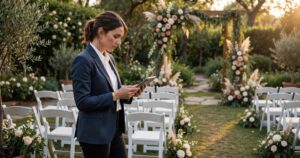
| A real photo of you | Face visible, natural light, ideally at work | 1 image, 2 at most |
| Two or three human details | Dog, coffee, the town you grew up in; the things people mention on the call | 2 to 3 sentences |
| Call to action | Check availability, see pricing, view a full gallery | 1 button, repeated at the bottom |
Total: 300 to 500 words. Longer pages lose the reader before the button; shorter ones read as a placeholder.
How do you write it? A fill-in template
Replace the brackets and cut anything that does not sound like you when read aloud:
- Opening: “If you are planning a [wedding / newborn session / brand shoot] in [city or region] and want photos that feel like [the day / your family / your business] rather than a stock library, you are in the right place.”
- Who you are: “I am [name], a [type] photographer based in [town], working across [region] and travelling for [destination weddings / commercial work].”
- How it feels: “Most of my clients tell me they hate having their photo taken. A session with me is [walking, talking, no stiff poses]; I direct just enough that you never wonder what to do with your hands.”
- Proof: “[Number] weddings since [year]. Featured in [publication]. [One-line client quote with first name].”
- Human details: “When I am not shooting, I am [two specific things].”
- Close: “If that sounds like the kind of photographer you want, [check my availability / see pricing].”
What makes an About page rank on Google?
The About page is often a site’s best chance at “[type] photographer [city]” because it is the one page that naturally says both. Four details:
- Page title and H1: “About [Name], [City] Wedding Photographer” rather than “About Me”; Google’s title guidance favours descriptive titles over generic ones. The keyword lives in the title tag, the H1 and the first paragraph, as covered in SEO keywords for photographers.
- Location in text, not just the footer: town, region and the areas you travel to, written as sentences, matching the address on your Google Business Profile.
- Image alt text and file name: “jane-smith-leeds-wedding-photographer.jpg”, not “IMG_4021.jpg”.
- Links out to your work: to the portfolio, pricing and the local SEO pages for each area you serve, so the About page passes authority to the pages that book.
What puts clients off an About page?
| Mistake | Why it costs bookings | Fix |
|---|---|---|
| Opening with your childhood camera | The reader wanted to know about their wedding, not your first Canon | Move the origin story to the end or cut it |
| No photo of you, or a photo of your back | Clients are choosing a person to spend a day with | A clear, friendly photo of your face |
| Third person (“Jane is an award-winning…”) | Sounds like a press release for a one-person business | First person, as if talking on the phone |
| No location | Google cannot place you; readers cannot tell if you travel | Town and region in the first paragraph |
| No button | The reader finishes the page and has nowhere to go | A call to action at the top and the bottom |
| Adjective stacks (“passionate, creative, authentic”) | Every photographer says them, so they mean nothing | Replace each with a specific: what you do, how many, for whom |
Should the About page have pricing or a contact form?
Not the full price list, which belongs on its own page, but a starting figure (“weddings from [amount]”) removes the biggest unspoken question and cuts the enquiries you would have turned down anyway. A form is optional; a button to the contact page is enough, and keeps the About page fast. The photography website tips post covers how the About, pricing and contact pages hand off to each other, and the portfolio examples show About sections that do this well.
How often should you update it?
Once a year, or whenever something in the proof line changes. Numbers age fast (“over 100 weddings” written in 2022 undersells you in 2026), and the photo of you should be within three years, or the client meeting you at the venue wonders who turned up. If you are rebuilding the site anyway, the About page is the one to write first, because everything else on the site borrows its voice.
Frequently asked questions
Open with the client and the type of work, then your name, location and specialism, how a session with you feels, proof such as years and numbers, a real photo of you, two or three personal details, and a call to action. Aim for 300 to 500 words.
First person. A one-person business writing about itself in the third person reads like a press release; first person sounds like the phone call the client is about to have with you.
300 to 500 words. Enough to cover who you photograph, where, how you work and why they should trust you, short enough that the reader reaches the button.
Yes. It is the natural place for “[type] photographer [city]” in the title, H1 and first paragraph, plus location text and descriptive image alt text, and it can link to the portfolio and area pages.
A starting figure is worth including (“weddings from…”) because it filters enquiries. Keep the full price list on its own page.
A recent, well-lit photo with your face clearly visible, ideally at work. Avoid photos from behind, heavy filters, or anything more than three years old.